Tuesday, May 18, 2010

Tambomachay, Puca Pucara, Templo de la Luna, Qenko, and Sacsayhuaman

After leaving the market we walked back over to the Plaza de Armas where we caught a taxi. Our original plan was to take the taxi to Calle Puputi, where we could catch the colectivo in the direction of Pisac and hop off at Tambomachay. The taxi driver tried to convince us to have him take us for 15 soles, but that was 7 more than the taxi ride and colectivo ride would cost us, so i politely declined. Then he offered to take us for 13 soles, which Ryan and I decided to accept since it would save us a lot of time and would cost under 2 dollars more. To be sure I understood correctly, I asked him if the 13 soles would include everything, to which he said yes.

When we arrived at Tambomachay, I handed him 15 soles and waited for change back. It was then that the following exchange happened (only in Spanish):

Evil taxi driver: You owe me 2 soles.
Me: No, you need to give me 2 soles.
Evil taxi driver: You owe me 17 soles total.
Me: No, you said that it would be 13 soles including everything.
Evil taxi driver: No, p*****o it was 13 soles to Tambomachay and then 4 soles to Calle Puputi.

It was at this point that I was so angry with him, not only for trying to rip us off, but also for assuming that I was some stupid American that didn't know the meaning of p*****o, that I threw 2 soles at him, jumped out of the car, called him a p*****o, slammed the door, and stalked away. Luckily there were numerous tourists and tour guides around, so I knew we would be safe and he wouldn't be able to come after us. I made Ryan stand with me near the car for 15 minutes, just in case someone tried to get in the taxi so that we could tell them not to because he would rip them off. However, no one tried and the taxi driver eventually drove away, and we were able to proceed happily on our way to see the ruins.


Actually, not too happily as I was still fuming, but the beautiful ritual baths and stream at Tambomachay quickly made me forget the evil taxi driver. From Tambomachay we walked across the street to the soundtrack of a braying donkey, passed by 2 llamas, and entered the ruins of Puca Pucara. At Puca Pucara there was a tour guide, who gave us a short 5 minute teaser tour, in hopes that we would hire his services. He informed us that the small rotund ruins had originally been used as a retreat to which the nobles would send their sons to become men and learn to work with the land. He also told us that there was a strong magnetic field on the site, which aided in the process. Despite his great self advertisement, we decided to not hire him since the site was the size of a postage stamp. We did, however, sit down and read about the site in our guidebook. It informed us that it was a hunting lodge used by the Incan emperors, a much less romantic and mystic story.


From Puca Pucara we set off on the long walk to the Templo de la Luna. An archaeological site that is free to enter, and as a result poorly maintained. Our walk started by walking along the side of the road, and we were joined by a young man who gives tours of several of the sites in the area, and was walking home for lunch. He told us some about the different sites, and recommended that we go to El Balcon del Diablo after our planned last stop at Sacsayhuaman. He said the ruins were incredible, infrequently visited, and just a short easy walk from Sacsayhuaman.

Templo de la Luna viewed from the distance

After following the road down through a small town, we saw a dirt road down and to the left. Instead of continuing to walk down the side of the road to the road, we chose to pick our way down the hill along one of the numerous trails and intersect the dirt road. Once down on the road we walked by a group of horses, which can be hired to ride through the ruins. We continued our walk down the dirt road alongside the stream bed at the base of beautiful valley. A road went off to the right, but we continued on down the road to what looked like a giant 30 foot tall rock. At first we were skeptical that this was the Templo de la Luna, but then we saw the ubiquitous women sitting in front selling souvenirs. We climbed to the top, and a boy came over and started telling us about a road that we could see climbing the hill across the valley. It turned out that it was an old Incan road used by Chaski runners, and extends all the way to Argentina. He then of course offered to give us a tour of the site, Qenko, and Sacsayhuaman in exchange for a tip at the end, which we politely declined.

Argentina here we come!

The Templo de la Luna was rather unimpressive, but there were some seats carved in the top, and stairs and carvings along the side, and the top afforded an amazing view. We picnicked on the grass under a tree with a view of the Templo and the Incan road, using a bottle cap to cut pieces off of our cheese.


After our wonderful picnic, we continued back up the road to where it had branched off and made our way down the branch toward Qenko. As we happily pranced down the road we suddenly came upon a puddle of mud with undisclosed amounts of horse feces mixed in that spanned the entire width of the road and went on for several hundred feet. Behind us were 2 British boys who were also stopped short in their tracks by the mud. Ryan chose to slowly creep along a ledge next to a barbed wire fence, but I in my clumsiness quickly fell off the ledge and into the mud. Since I was wearing sandals, my feet and ankles were quickly overtaken by the mud, and I chose to lift up my pant legs and splash my way through it. The 2 boys behind us took a similar approach although their feet escaped unscathed since they were wearing hiking boots.


Once we escaped from the mud we kept to the right of the houses, and were very shortly at Qenko. I asked the woman punching tickets if there was somewhere I could wash my feet off, and she pointed me to the restroom where I propped each of me feet up in the sink and scrubbed them off.

The ruins at Qenko were very fun to explore. Like the Templo de la Luna, Qenko is a giant rock. But instead of having carvings on the face of the rock, tunnels, steps, and shelves were carved out within the rock itself.


After Qenko we continued down the main road until we encountered the imposing form of Sacsayhuman in the distance and continued down the side road to the entrance. Sacsayhuaman was a defensive fort that protected Cuzco, and the walls are said to form the teeth of the puma which Cuzco is supposed to resemble. At the time of the Incas the fort had 3 towering and zigzagging walls stacked one atop the other, with 3 towers on top. These days the towers have toppled, but the imposing walls remain, although they are now swarmed by tourists instead of invaders.


Sacsayhuaman was our favorite site of the day. The stonework was massive and impressive, and you could imagine the difficultly that the Spaniards had scaling the walls. At the top of the walls there was also an overlook with an amazing view of the city of Cuzco, and Peru's answer to Christ the Redeemer.

See that little white thing on the left? It is actually a GIANT Jesus statue that overlooks the city.

After exploring, we made our way across the field of grass to the rodadero opposite where we climbed the stone steps carved into the side. After a quick picture opportunity in the throne on the top, we made our way to the back of the large stone hill, where we indulged our inner child and slid down the natural stone slides.


From the base of the slides we made our way through some of the ruins behind the rodadero, and then stopped to ask the man in the guard shack about how to get to the Balcon del Diablo. According to him it was a several hours walk from Sacsayhuaman, and too treacherous to undertake during rainy season, so we put those ruins on our next trip to Peru list.

From Sacsayhuaman it was an easy walk down the stairs and into Cuzco. That night we enjoyed a delicious meal at Pacha Papa. I had the grilled alpaca, and Ryan ordered the pork stew which we followed up with a delicious traditional pudding that was a lot like tapioca, only with quinoa substituted for the tapioca beads. Both were delicious, although I think we were both partial to the alpaca. This was certainly the fanciest meal of our stay in Cuzco, but well worth it for the delicious food and the wonderful setting in a candlelit courtyard beside a wood fired oven.

Grilled alpaca, stuffed peppers, and potatoes

Pork stew

Cuzco Market

We chose to start our last full day in Cuzco by completing our trio of market visits with a visit to the local Cuzco market. This market, like the one in Chinchero, caters much more to locals than it does to tourists. Unlike Chinchero, the market in Cuzco revolves around food and groceries instead of homemade textiles.

Upon entering the market through the northwest corner, we were greeted by a few densely packed rows of machine made hats, scarves and blankets before we emerged to row upon row of food. A few steps in we encountered 2 entire rows full of women with blenders. When we stopped to gawk at the potential deliciousness we were beckoned over by one of the women who had 2 empty stools in front of her stall.


I chose to have orange juice with mango for 4 soles, and Ryan chose orange juice with Papaya for 3.50 soles. Juice lady explained all of the medicinal uses of the different fruits to us, while her small son clung to her waist. When we asked her about the star fruit in particular (apparently it helps with breathing), she offered to put some in our juice for free. She piled it in the blender, along with orange juice, and in my case an entire mango, or in the case of Ryan half a papaya.

She may look friendly here, but do not be mistaken. Juice lady will return with a vengeance in a later post.

While we sat and enjoyed our juice juice lady gave us a local newspaper to read, where we encountered an article detailing more flooding in the area surrounding Machu Picchu. More homes were lost and more people had died. It was definitely a good idea to not try to get to Machu Picchu via Santa Teresa, because even if we had made it there then we would have been stranded.


After finishing the delicious juice we decided to explore the rest of the market. After picking up a few souvenirs we made it to the back of the market, where we encountered another row of women. This time they were selling coffee with milk and different types of breakfast sandwiches. We picked up 2 cafe con leches for 1.50 soles each, and 2 pan con huevos for 1 sole each. They were delicious, although cafe con leche lady was significantly less friendly than juice lady.

Cafe con Leche Lady. Notice that small glass pitcher filled with something that looks like balsamic vinegar? It is actually filled with a super concentrated coffee that you add to the hot milk to mix the cafe con leche to your personal taste.

On our way out of the market we stopped by the cheese area where we picked up some delicious queso fresco for our picnic lunch. And then we encountered heaven. An entire row of basket upon basket filled with different shapes and types of bread. We picked up our staple of small round breads that we had enjoyed several times on the trip. While placing our breads in the bag, the woman helping us happened to drop one on the floor. She picked it up and put it aside, although both Ryan and I were sure that as soon as we left she placed it right back with the others.

Friday, April 16, 2010

Warning, graphic photos of guinea pig follow

At La Escondida we ordered 2 small Cuy for 25 soles each. Luckily we were forwarned by our tour guide that the larger Cuy have a very strong and pungent flavor, or else we would have followed our usual motto of go big or go home.

We were first brought several potatoes and a dipping sauce which we enjoyed snacking on while we waited:

We also ordered a Brahma beer (our first alcohol of the trip, I was too worried about the alcohol increasing our chances of altitude sickness while we were acclimatizing), which came in a huge 1.1 liter bottle, and turned out to go perfectly with the delicacy which we were about to enjoy:

While we were waiting the waitress came out to ask if we would like our cuy whole or chopped up (a serving style that I have heard they offer only to tourists), of course we said that we wanted it whole because we were going for the entire experience. A few moments later we were greeted by 2 of these crispy and perfectly browned delicacies:

Whose lives came to an early end via a quick knife to the throat:

And still had teeth,

claws,

and kidneys.

Not ones to be squemish about our food, we jumped right in and began tearing them limb from limb:

And they turned out to be delicious. In the first picture of the cuy you can see some green herbs spilling out of the body cavity. Not only are the cuy stuffed with this delicious stuff, they are also fed it, so that the flavor permeates all of the meat resulting in a flavor unlike any either of us had experienced (although the texture was just like chicken!). They had also put a delicious herby rub underneath the crackly skin, further adding to the amazingness. My favorite part were the ears, which were like crunchy cuy chips, and Ryan's were the kidneys. The decision on least favorite part was unanimous: the brain. Supposedly the brain is a delicacy, and people often argue over who gets to enjoy it. We cracked open the skull of one of our cuy and split the brain. Ryan was able to swallow it, I gave it a quick chew and had to spit it out into my napkin. While the flavor was the same as the rest of the guinea pig, the texture was horrible.

Despite the small size we both found the cuy to be very satisfying as the time needed to pick it apart allowed us time to digest. Would we eat this delicacy in the future? Most certainly. In fact, we would be ecstatic if restaurants in Houston began offering cuy on the menu, but unfortunately that is highly unlikely, so we will have to return to Tipon to satisfy our cravings.

Tuesday, March 23, 2010

The road toward Urcos

Our exploring up to this point had been to the north of Cusco, but our explorations on Wednesday took us to the southeast, in the direction of the town of Urcos.

After an overpriced 6 sole each breakfast of bread, eggs, and yogurt at our hostel, we headed down to the Plaza de Armas to catch a taxi to the Urcos bus stop on Ave de la Cultura. This 5 soles taxi ride turned out to be well worth it, as Ave de la Cultura turned significantly more sketchy over the extra quarter mile between the Pisac bus stop on Calle Puputi where we had been the day before, and the Urcos bus stop. As we stepped out of the taxi we were a little apprehensive, especially since there were no buses in site. We were relieved, however, when a quick look around revealed a fleet of run down buses waiting behind a large gate. We hopped on the Urcos bus and paid the 2 sole each fare, making sure to inform the money collection man that we wanted to get off of the bus at Pikillacta.

The money collection man is a rather ingenious addition to the bus employee arsenal. He is in charge of calling out bus stops, collecting money, and opening the door and pushing passengers out as the bus slows down, leaving the bus driver to do what he is hired to do: drive. We were able to find seats on the bus, and before we knew it about an hour had passed and money collection man let us know we were almost at Pikillacta. As Ryan and I prepared to jump out of the bus as it slowed down, the bus did something remarkable and came to a complete stop. I guess they decided to be nice to us tourists. We hopped out of the bus, and walked down the road toward Pikillacta.

Pikillacta, or City of Fleas, is a Huari city built in approximately 800 AD. The Huari are one of the cultures that predated the Incas. While we did not see any fleas, we did see long straight roadways bordered by walls that we could peer over to see the remnants of houses. But the most amazing part were the wild flowers. All of the rains that the region had been experiencing caused flowers to burst forward in numbers usually unseen in this area. In addition to the ruins and breathtaking flowers, there was a small museum on the site with artifacts and a fossil of my favorite animal, the (giant) armadillo.

From Pikillacta it was a short 100 yard walk to Rumicolca, which is across the main road and around a bend. No ancient culture, including the Romans, is without a pyramid, and the Incas are no exception. Rumicolca was the original defensive gate protecting entrance into the Cusco Valley from the time of the Huari onward. On either side of the step pyramid lie towering walls, made with a combination of Incan and Huari stonework, and you can almost imagine guards lining the tops and protecting the "navel" of Incan society.

From Rumicolca we crossed back over the main road and prepared to hunker down for a while and wait for a bus or collectivo to come by and take us to Tipon back in the direction of Cusco. Before we even found a good place to sit a collectivo came by with horns blazing, and pulled over to pick us up. From there it was a short 20 to 30 minute ride to the town below the Tipon ruins, where we hopped on a taxi to take us up the mountain side for 8 soles, once agian skirting mud slides as we had on our way to Pikillacta. At the top our driver asked if we wanted a ride back down, but we had to decline as all we had was a 100 sole bill, and he did not have enough change to break it (finding vendors who could break the large bills that the ATMs gave us was a constant source of anxiety for us, but we managed to turn it into a fun game by always guessing as we approached someone just how large of a bill we could give them).

We had originally been planning to get a tour here at Tipon, but when a guide approached us he did not have the change necessary to break our 100 sole bill either. However, as luck would have it, he and the taxi driver were friends and neither one of them wanted to lose a customer. So they pooled together their money to give us change, and we were happily on our way with a ride back to the bottom secured.

This turned out to be a great place for a tour since our guide was able to tell us all about the different agricultural experiments that the Incans carried out at Tipon, and details of the design of the fountains. The only catch was that the guide spoke Spanish, and Ryan only started learning Spanish 2 months before our trip. Ryan, however, is awesome (not that I'm biased or anything) and was able to follow almost all of what the guide had to tell us (the wonderful podcasts from coffee break spanish that he used to study before we got to Peru probably helped out as well).

Tipon was one of 2 agricultural experimentation sites near Cusco, the other being the circular terraces that go down into the earth at Moray. At Tipon they constructed 3 different levels of terraces, each divided into subterraces with different forms of irrigation. The steepness of the mountainside upon which the terraces were constructed results in temperature variation between each of these terraces, allowing corn to be grown on the lowest level, potatoes on the second, and quinoa and other grains on the third. Each terrace then had areas with low, medium, or high levels of irrigation, with canals flowing down each which could be blocked off to flood the fields. Up on the hill above Tipon they built storehouses so that the dry wind at the higher elevations could blow thorugh the openings in the walls and keep the grains from rotting.

In addition to the remarkable irrigation canals that were fed by glaciers miles away from Tipon that still exist today, there were also several fountains for ritual bathing, waterfalls between the terraces, and one particularly amazing fountain. This fountain started out with pure spring water, which was then split into 2 channels, one to represent the feminine/darkness/the moon (why are females always dark?!?!), and one to represent male/light/the sun. The incline of the channels varied such that more water is expelled from the male side than the female side. After cascading down the water from either side mixes via 2 canals that form an X, before splitting off to form 4 canals representing the 4 regions of the Incan empire, which are called suyus.

In addition to the water features, there were also several houses for the nobility, and apparently a whole settlement over the hill from the terraces which is currently being excavated and is not open to the public. There was also a huge rock into which the Incans had carved several symbols. They used this rock to measure the days of the year via the position of the mountaintop's shadow on the rock. When the Spanish arrived they sought to destroy all aspects of Incan culture and religion, this rock included, and there are now crosses carved across the rock in several places.

After a day full of visiting ruins we were ready to eat some good food, so we headed down the moutainside to La Escondida, a restaurant recommended to us by a police man in Cusco that we had a lovely chat with, our taxi driver, and our tour guide at Tipon because they have the best Cuy, or guinea pig, in the Cusco region.

Friday, March 19, 2010

Positively Perfect Pisac

Tuesday morning we woke up early with plans to mosey over to Calle Puputi, stopping along the way to grab some breakfast, and catch the collectivo to Pisac. As usual, we were accosted by the overly enthusiastic cab drivers in the Plaza de Armas as we went to walk across it. Usually we ignore them, but on this morning we figured it couldn't hurt to ask how much the ride to Calle Puputi would cost. The answer? 4 soles. Less than $2 to take a taxi instead of walking over a mile while dodging crazy Cusco drivers? Definitely worth it.

The cab driver happened to know exactly where we were headed, and dropped us off right in front of the collectivo, where we were rushed inside and the car took off. With less than 5 minutes from the Plaza de Armas to being on our way to Pisac, we felt a little overwhelmed by the whirlwind pace of the morning which had greatly departed from the leisurely stroll we had been anticipating. While our stomachs growled in protest of the skipped breakfast, the minivan masterly made its way toward Pisac on the scariest road I have ever had the misfortune to ride on.

Just 1 week before our trip to Pisac the area had been hit by another round of heavy rains and severe flooding. This second round of floods resulted in the death of 7 women in Pisac (http://www.peruviantimes.com/seven-killed-by-flooding-in-cusco-region/045191), and made the road between Cusco and Pisac impassable due to several mudslides. Originally we had thought that Pisac would be another set of ruins that we would need to place in the future trip category, along with Machu Picchu, until we had overheard on Sunday that the road was again passable. It turns out that passable is a relative term.

During the 1 hour long ride we had to make our way around countless mudslides that blocked half of the road. There was no one present to direct traffic, and each time we made our way around the mudslides onto the opposite side of the road we tempted fate in hopes that we would not have a head on collision with a car headed the other way. The scariest moment of the ride, however came when we passed a section of road that had been undercut more than halfway by the neighboring river, leaving pieces of asphalt precariously jutting out into space. A very high tech and obvious method had been used to mark that you could not drive on this section of road: rocks. Not flares, or even bright orange cones, but just tiny little rocks the size of my hand bordering the section of undercut road. Needless to say we were relieved when the ride was over, and decided that at the first sign of rain we would run back to the collectivo in hopes of making it back to Cusco before the road became impassable again.

In addition to the road being fraught with dangers, the main bridge in Pisac had also been washed out. So instead of being dropped off in the main square, we were dropped off across the river, where we had to cross a suspended footbridge. After grabbing a quick bite of vegetables and beef with gravy served over rice (only 2 soles each),from a woman at the side of the road, we excitedly bounced across the suspended bridge, at least until we realized that the bridge was the only thing protecting us from falling into a river that was threatening even at that moment to overflow its banks.

Once we crossed the bridge we were met by several taxi drivers offering us rides up to the ruins and we chose to ride with a kind looking elderly gentleman named Pedro. On the way up to the ruins, which tower 3,000 feet above the town on the side of the mountain, Pedro and I chatted about the ruins, and where Ryan and I had been so far. When we reached the top he walked out into the ruins with us and pointed out all of the different things we should see and the best way to walk through the ruins. He then offered to come back and pick us up in 2 hours, and then we could pay for the round trip at that time. The taxi ride seemed a little bit pricey to us at 30 soles round trip, but turned out to be money well spent since Pedro was so helpful.

The ruins at Pisac were breathtaking. After exiting the taxi we walked out between some of the houses at the ruins, and were greeted by amazing views up and down the entire valley, with terracing below us as far as our eyes could see. In addition to what our eyes could see, there is also what we couldn't see: tourists. Our entire time at the ruins we saw just 5 other tourists. From the houses we made our way across to the baths, which while pretty were nothing compared to those that we would see at Tipon the next day. From there we made our way across a trail that followed the cliff face, passed through a cave, and came out the other side at a set of Inca crypts made of rather crude stone work, but still very interesting to see as they were the only crypts which we saw on our trip. From there we took stairs down several hundred feet to see the intricate stone work at the sun temple. It was interesting to see how much the temples varied between Ollantaytambo and Pisac. While Ollantaytambo was a small site with a small Sun Temple, Pisac was large and sprawling, with a Sun Temple to match.

From the Sun Temple we made our way down through the terraces to another set of houses, situated above more seemingly endless levels of terraces. But it wasn't the walk down that was difficult, it was the walk up. If you remember, we were supposed to meet Pedro 2 hours after he dropped us off for the ride back down, and by the time we finished our leisurely walk through the ruins we had only 30 minutes to walk back up. This seemed like an easy task. It was not. Even though the wonder drug acetazolamide kept the altitude sickness at bay, it did not magically enlarge my lungs. Who would have guessed. So while Ryan, the runner, pranced ahead of me up the hill, my walk was punctuated by drawn out gasping episodes. Every 5 minutes or so I had to stop, double over with my hands on my knees, and gasp for air. Maybe I should take up running.

Despite my poor lung capacity, we met Pedro in time and he took us down the mountainside to the market in Pisac, stopping along the way so that I could snap a few more pictures of the ruins from afar. The market here was much larger than the one in Chichero, but also much more tourist oriented. Most of the textiles were machine made, unlike the gorgeous handmade ones which we purchased in Chinchero, and most stalls took dollars for payment. In spite of the obviously tourist oriented nature we continued our spending spree and purchased a few more gifts for our families, along with a lovely table runner for ourselves.

Over the course of our market trips it became obvious that I am the bargainer in this family. While I would haggle down to the last sol, just to see how cheap I could get them to go, Ryan's face would betray his excitement. When he asked about a Peru soccer jersey and found out the price of 20 soles, Ryan's face lit up so much that I knew the woman would not compromise on the price.

In a corner of the market we found a man with a large wood fired oven cooking ham and cheese empanadas. I think we were both a little disappointed with the seemingly lunch meat ham that the empanadas were stuffed with, but the price was right at 2 soles each. In the corner of the restaurant there was a cute little enclosure filled with guinea pigs. As we approached to take a closer look they scattered, apparently knowing that the near future would find them impaled on a stick, roasted over a fire, and placed on a plate in front of a salivating tourist.

As we exited the market onto the main road, we realized that we didn't know which way to walk to get to the pedestrian bridge. As we stood there wondering what to do, our most unique transportation of the trip happened to pull over and offer some help. This help came in the form of a very nice man riding on a 3 wheeled bicycle cart. When he realized where we were going he said that he was headed in the same direction, and told us to hop on in. I asked him how much we needed to pay him, and he insisted that no payment was necessary, as he was on his way there anyway.

Along the way it became obvious that he does not usually transport human cargo. We happened to pass several of his friends who were headed the other direction on their own bicycle carts, and they called out to him, pointing, laughing, and calling him taxi. We were both grateful for the ride, as the bridge ended up being over a mile away and the sun was glaring. It was actually surprisingly comfortable on the cart, although the speed bumps were quite hair raising. When we arrived at the destination I gave him a few soles for his help, especially since he will probably be the brunt of jokes from his friends for weeks to come.

Back in Cusco that afternoon we stopped by Qorikancha, where the Church of Santo Domingo was built atop an Incan Sun temple. Since Cusco was the "navel" of the Incan empire, the Sun Temple here was appropriately elaborate with a ring of gold several feet wide encircling the complex along the inner wall, and a garden filled with exotic plants and animals made entirely from gemstones and precious metals. Unfortunately this was all pillaged by the conquistadors, leaving the expertly engineered Incan walls which the church was built upon.

In the 1800s a large earthquake in the area revealed portions of Incan walls that had been covered up during construction of the monastery, and the monks set upon the uncovering of the walls. The result today are solid Incan walls juxtaposed upon the gorgeous monastery courtyard. While we were here we also hit up the Qorikancha museum, mostly becuase it was included in our tourist ticket (Qorikancha itself was not and cost us about 12 soles each). It turned out to be well worth it, both for their hilarious english translations, and a few Incan mummies in a display case in the back.

After Qorikancha we walked over to the Iglesia y Convento de la Merced. This inner courtyard in this convent put the Qorikancha courtyard to shame. There was a bubbling fountain, gorgeous flowers, and best of all we were the only people there. The best part of the convent, however, laid hidden behind a heavy wooden door that was unlocked for us by a friendly looking, if quiet, man and his young daughter. Not only does this church possess the second largest pearl in the world, put it is displayed in a monstrance made in the 1720's with 22 kg of gold, 600 pearls, 1500 diamonds, and countless other precious gems. What is a monstrance you ask? According to wikipedia it is "the vessel used in the Roman Catholic, Old Catholic, Anglican and Lutheran Churches to display the consecrated Eucharistic Host, during Eucharistic adoration or Benediction of the Blessed Sacrament." This still doesn't help me out much, but probably means something to you Catholics out there.

Worn out from our long day of travelling we ended the day with sweet tamales, purchased from a woman on the street corner for just 0.50 soles each. Dinner for 2 for 3 soles... perfect.

Tuesday, March 9, 2010

Ollantaytambo

We stepped out of the collectivo in front of the local mercado and took a moment to do a 360, both so we could take in the sites and to get our bearings and find out which way to our home away from home. Our hostal, Hostal Chaska Wasi, turned out to be very easy to find. There are really only 2 streets in Ollantaytambo which cars can drive on, one into the plaza, and one out. Our lovely little place was up one of the small pedestrian streets radiating out from the plaza. Before we left the plaza, we were already charmed.

First off, there was no one shouting at us offering massages, taxis, or paintings. Secondly, the town is located in a very small valley that sprouts off of the main Sacred Valley, and on both sides large mountains rise above Ollantaytambo. Across Rio Urumbamba we could see towering snow capped peaks with just a few clouds gathered at the top.

Have I mentioned the weather yet?? It has been amazing! As I know you have all heard, Peru has been experiencing the worst flooding in 15 years since January thanks to El niƱo (such a benign name for such a horrible phenomenon), and some of the worst rains actually came last week, with additional flooding throughout the Sacred Valley. But so far all we have had is sun. The highs are supposed to be in the 60s, but at this high of an elevation it feels more like 80, and we have been loving getting some sun on our pale scientist bodies. This seems to be a trend for our trips, if you've read our other posts you will remember that when we were in Ireland I actually managed to get sunburned because it was so sunny!

So now back across the Atlantic from Ireland, and across the South American continent. In addition to the location, Ollantaytambo itself is very charming. The narrow streets are surrounded by Inca walls which merge into walls of more modern houses which have been built on top of them, and down the middle of the streets run little streams.

Our room turned out to be equally charming, especially at a rate of 50 nuevo soles (remember 2.8 nuevo soles =$1). It looked out on the courtyard, and had a small bathroom with lukewarm water. Best of all everything was very clean. We were glad to see we had chosen a good place to to stay, and we set out to buy some sunscreen (new Spanish word learned, blockador).

When we returned from our little outing, during which I am still convinced we got completely ripped off on the tiny bottle of spf 60 sunscreen, we were unable to unlock the door to our room. I went to ask the owner of the hostal for some help, and he came and gave it his best, which unfortunately was not quite good enough. Luckily the window had been left unlocked, and we slid it aside and I climbed in. Once I had opened it from the inside he tried to get the key to work, but to no avail. It turns out that his daughter is in charge of most of the day to day things, and she was out of town for the night. He then went on to tell us that it was "bastante seguro" and we should just leave the door unlocked. This means that it is "secure enough". It was the enough part that concerned us, so we left the door locked the entire time and entered through the window.

After that small hiccup we were off to dinner. We have decided to post later about everything we have eaten, because there has been a lot, and it has been delicious, and we have diligently taken pictures of it all, so you will just have to wait patiently.

We followed up dinner with a whopping 13 hours of sleep, from 7 pm to 8 am. Apparently all of the travelling wore us out. Ryan was the first one up, and when he went to wash his hands he noticed nothing came out of the tap; the entire town was out of water.

So after quickly getting ready sans water (luckily we had a little bit of purified water to brush our teeth with), we were off to breakfast and the ruins. First we ate at a small restaurant in the main square that donates all of the proceeds to a women and children's charity in the area, before heading towards the ruins. On the way we crossed a bridge that was about 50 feet above the water, and held up by sandbags. No joke, pictures will follow. I am very glad that we did not cross over that in a tour bus like a lot of other people we saw that day.

At the bottom we purchased our boleto turistico, which includes many of the sites around Cusco. It cost us 130 soles each (gulp). They could have cost only 70 soles if we had an International Student ID card, but we had calculated it out and with the cost of the card we would not have been able to save anything overall, and ultimately we are lazy.

The ruins at Ollantaytambo were breathtaking. A few terraces at the base lead up the mountain side to the temple of the sun, where giant stones over 15 feet tall are joined together without mortar to make a wall with little nubs sticking out of it. There were also several buildings on the site that were built earlier in the Incan empire or in preincan times, and it was very interesting to see the evolution from small rough stones haphazardly stuck together with mortar to 15 foot tall stones cut to perfectly complement one another. From there we walked up behind the ruins for a ways, following a sign in Quechua which we could not understand. Exploring is half the fun, but it didn't seem quite as fun when we were 3/4 of the way up the mountain and the sun was beating down on us with no shade in site, so we quickly hurried back down, but not without first taking several pictures of the amazing views up and down the sacred valley from our perch. While up high we also saw that the ruins scattered across the opposite mountainside appeared to be accessible by footpath, and we decided to check them out. After viewing the amazing network of fountains at the bottom of the Ollantaytambo ruins, we headed across town in search of the other trail just in time to miss the buses full of tourists on the package sacred valley tour (another trend of our trips as you will see).

Going across to the other side turned out to be a great idea. We found the small trail and hand painted sign between 2 houses, and started up the hill past a very portly pig. The trail led much higher than the main ruins (the ones you have to pay for) on the other side, and the views were even more breathtaking. Luckily, when we started out the sun was on the right side of the mountain and we were in the shade. We followed the paths up with surprisingly little gasping for the 9,000 foot altitude and visited 5 different sites of ruins without seeing a single other person the entire time. They appeared to be pre or early Incan because of the stonework, but we will have to look them up in more detail when we get back to the states.

So far we have had no altitude sickness, despite Cusco being at 12,000 ft and my history of horrible altitude sickness at an alititude of 8000 feet. I believe it is unanimous that acetazolamide is a miracle drug, although all miracles come at a cost. As mentioned yesterday, we have been making quite a few trips to the bathroom. In addition, the medication can causeparesthesias aka tingling in the extremities. For us, can means does, and we both have half a dozen or so bouts of tingling each day that last about half an hour each. Some times its subtle, but sometimes it is a little more pins and needles like. Ryan is going to take his last dose tonight, the earliest night possible according to the dosing schedule. For me, the benefits outweigh the tingling, and I am going to take it one more day before calling it quites just to be safe.

After our hike we went back to collect our bags and pay for our room at Hostal Chaska Wasi. Our own room, with private bath and lukewarm water ended up costing 40 soles (about $16), whether this was because he choose to give us a discount since the key didn't work, or due to miscommunication between him and his daughter is anyone's guess, but we did truly enjoy our stay and he was a very nice man.

To head back to Cusco we grabbed a combi in front of the mercado. We were lucky to be some of the first people on, and we snagged the front seats so we could see the beautiful views. This turned out to be one of the best decisions we have ever made since about 12 people jammed into the back of the minivan before we took off. Every time we stopped along the way to let someone off of the collectivo, 2 more people would take their place, so that by the end there were almost 20 people jammed into the tiny minivan.

In Urubamba we were fortunate to catch a shared taxi for just 7 soles each. When we climbed into the back seat we squished all the way to the side, expecting to sit 5 across, but he left when there were only 3 of us in the back, and 1 woman in front. It was luxurious, and we were even able to put our bags in the back instead of squishing them on our laps!

Once we arrived in Cusco we walked to our hostal, Walk on INN (cue cheesy laughter). This turned out to be a much different establishment than Chaska wasi. When we arrived we had to push a button to be buzzed in, and they made copies of both our passports. It is costing us 70 soles a night, but it is very safe, the water can be turned up to scalding, and they offer us all the tea we can drink (I don't think they know who they are dealing with, Ryan is at 5 cups tonight and counting, I am at 3). After checking out we wandered around Cusco for a bit, ate lots of street food, including this odd liquid jello like drink, had dinner, and worked out details for our Tuesday trip to Pisac.

Monday, March 8, 2010

Our long travels landed us in beautiful Ollantaytambo

After my rather uneventful but very early flight to Atlanta (thanks Peter!). Ryan and I went for some delicious food near the airport before arriving for our flight almost 4 hours early (we are a little ocd like that when we are spending so much on tickets). It turned out to be a great thing that we got there so early, as they offered us an earlier flight to Miami, and we figured why not spend our time in an airport that we don't see as often. It turned out to be a great idea because the flight had only 12 people on it! That is unheard of in this day and age of overbooked flights. It was also wonderful because I made friends with the flight attendant and he was able to recommend a great Cuban restaurant, La Carreta, in the airport. Ryan had a delicious pork dish the name of which I cannot remember, and I had my favorite, ropa vieja. Both with maduros on the side of course!

Ryan enjoying a delicious airport meal

While the food was delicious, it unfortunately only filled 1 hour of our almost 7 hour layover!!!! We walked through every hallway in that airport. We also stopped in a few of the duty free shops searching for the perfect moisturizer to relieve Ryan's chapped hands. He has been spending a lot of time in da (sterile) hood, and they felt like sand paper when we met up. While we were unable to find a favorite, the combination of over 20 subpar lotions seemed to do the trick. After 6 long hours we were finally able to board our flight and head to Lima!!!!

Chatting on the telephone with nicely moisturized hands. We only brought along 2 small backpacks on the trip, but came back with an extra duffel full of purchases.

The flight to Lima was rather uneventful, although slightly odd because they served dinner at about 1 in the morning. Once we arrived in Lima we breezed through customs in 15 minutes(compared to the 2 hours we heard it could take), even with me getting the red light and having to undergo additional screening. This meant that once again we had way too much time in the airport, almost 4 hours, but at least early is better than late. After another long wait during which we struggled to keep our eyes open it was off to Cusco!!

Our first glimpse of the Plaza de Armas in Cusco

Once we arrived in Cusco we were going to take a taxi straight to Chinchero to get to the Sunday market there before it closes, but the man at the airport told us it would cost $30 (!!!) to get to Chinchero versus 20 soles (exchange rate is 2.8 soles per $) to get to the center of Cusco. We choose the cheaper option and went to the center of Cusco. From there it was about a half mile walk to Calle Pavitos (Turkey Street), where we were able to catch a collectivo to Chinchero for 7 soles each. Definitely the cheaper idea!!

For those of you who aren't familiar, a collectivo is basically a minivan, driven by a semi random man. He stands on the side of a previously specified road and shouts the name of where he is going, hoping to gather customers. Once the collectivo is full enough that even the floor of the small aisle is full, and people are sitting 5 across a seat, he leaves, needless to say it is a little cosy.

Our first glimpse of the high snow capped peaks of the Andes.

Once we arrived in Chinchero our first order of business was a bathroom. We have been taking acetazolamide to help with altitude sickness, and the unfortunate side effect is having to urinate more frequently. This has made no difference for me, since I have to pee a lot anyway, but seems to have made a huge difference for Ryan. We stopped at a store to buy water, and she told us that we could go in the door with a red flag to use the bathroom. We cautiously entered the doorway and walked into a small dark bar. With smiling faces they directed us to a wooden leanto about 5 feet tall, and Ryan walked in. I anxoiusly stood outside wondering how his first experience with a bucket toilet was going. When he exited he appeared happy, and I decided to brave it myself. It turned out to be much better than I expected, with 2 raised footbeds, and a hole at which you are supposed to aim (a little difficult for us ladies but I tried my best).

When we stepped out of the collectivo we were greeted by this amazing view.

From there we were off to the market. The market in Chinchero is much smaller and less touristy than the one that we are going to tomorrow in Pisac, and we were one of only a few small groups of tourist, so we were very popular with the vendors. At one point so many of them began shouting "senorita" at me that even they recognized how comical it was and broke out in a chorous of laughter.

The market in Chinchero.

We picked up some great souvenirs at Chinchero, including a flute made out of a llama bone, a few presents for my dad (sorry its a secret!!), and an Incan wedding blanket, which we thought was an apt purchase since we just got engaged 2 and a half months ago.

After Chinchero we hopped on a bus to Urubamba. Turns out the collectivos are actually more comfortable, which may be hard to imagine. Ryan stood near the door the entire time, and struggled to not fall out while people pushed by him to jump out of the bus as it slowed down to 5 mph at each stop, but the great part was it cost less than 2 soles each. Once we made it to Urubamaba we hopped on a collectivo to Ollantaytambo for only 1.20 soles each. The 2 hours of crowded travel through amazing scenery turned out to be well worth it!!

Ollantaytambo

Saturday, February 27, 2010

Plans for our NEXT trip to Peru

Vilcabamba aka Espiritu Pampa
This was the last strong hold of the Inca Empire, and the place from which Manco Inca orchestrated rebellions against the spaniards for 33 years, from 1539 to 1572. It was actually discovered by Hiram Bingham in 1911, within weeks of his discovery of Machu Picchu. His goal on that expedition was actually to find Vilcabamba, but he decided that this could not be it because it wasn't large enough. Instead he somehow managed to convince everyone until well after his death that Machu Picchu is Vilcabamba. It turns out he just didn't look hard enough and the site is much larger than Machu Picchu. This explains why history professors should probably not become archaeologists! If not for Hiram Bingham originally billing Machu Picchu as Vilcabamba it would have never been so famous.

To get here we will have to take a 9 day trek, with a peak elevation of over 12,000 (!) feet, and ending at 2,624 ft. Why walk 9 days to see ruins mostly covered in jungle roots? First off, that is a lot of downhill, and I like hiking downhill. Second, and more importantly, there are actually several ruins to see along the way, and Vilcabamba itself is absolutely deserted. One account I read said that they were the only person all day. Imagine that compared to the 4,000 people who visit Machu Picchu in a day.

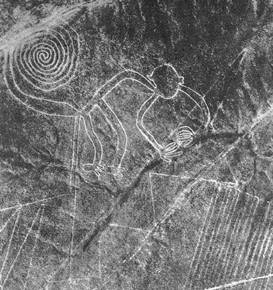
Nazca Lines
This aerial photograph was taken by Maria Reiche, one of the first archaeologists to study the lines, in 1953.
Thought by some to have been drawn by aliens, how can you resist? Well, luckily we did resist. This was a close contender for a few days when we found out that we couldn't see Machu Picchu, but it turns out the cheapest tours leave from Cusco, go to Nazca, and then drop you off in Lima, and we had already bought round trip tickets from Lima to Cusco. And then on Thursday an aircraft flying over the lines crashed and all 7 passengers died (http://www.philstar.com/Article.aspx?articleId=553123&publicationSubCategoryId=200). This one is definitely best left in the next trip category, when hopefully small aircraft regulations will have improved.

The Amazon
With a picture like this, how can you resist it? Well, first there is the getting there, which would take a sizeable chunk of already short time. Then there are the shots. No one likes needles, and we would need to subject ourselves to lots of shots deemed unnecessary for American toddlers to receive before we enter the Amazon.

Is there anything left to see on this trip then?
What I found so amazing when we started planning our trip to Peru is just how many things there are to see. Why don't more people go here for their vacations? Probably because it is daunting to whittle down all of the amazing sites into a manageable itinerary for the length of vacation that most of us can take. So what did we decide to see? Here's a hint: lots of ruins, markets, cuy, and the culinary capital of South America!

Thursday, February 25, 2010

1 week until Peru!!!

Alright, more like 1 week and 1 day, but a week from today I will be taking a flight from Houston to Atlanta, hopefully find some delicious lunch in Atlanta, and then fly to Miami with Ryan, where we will catch an overnight flight to Peru.

Why the extra stopover in Atlanta? Money. We were able to get an amazing deal on roundtrip tickets from Atlanta to Lima for only $324 each! $324! I have spent more money than that on a ticket to CA for a long weekend to visit my wonderful family. It was a no brainer to buy those tickets and then get a seperate one for me to Atlanta, plus it means Ryan and I get to fly together the whole way. Of course, little did we know that we would end up having to take another trip to Peru later.


Another trip? But we haven't even gone on this one yet... yes, but as of right now there is no way to get to Machu Picchu. If you remember, in January mudslides resulted in the closing of the train from Ollantaytambo to Machu Picchu and the train is still under repair. We were hopeful that we would be able to go through the "back door" to Machu Picchu. This involves a bus ride from Cusco to the small town of Santa Maria, from there we would take a combi through Santa Teresa to the very scenic Hydro electric plant. Yes, an electric plant. From there it is a 2 hour walk, or 15 minute train ride into Aguas Calientes, the town at the base of Machu Picchu (more details on this route: http://chanatrek.com/?p=152). This route takes 9 to 12 hours, compared to the original 4 hour train ride that we were planning on taking, but we were ok with that if it meant getting to see one of the new 7 wonders of the world (what are the others? http://en.wikipedia.org/wiki/New_Seven_Wonders_of_the_World, I've already been to 2 of them, and this would make 3, aka almost half). Plus, this route is a lot cheaper, so we were excited to know that we would still get to see Machu Picchu AND save around $90 each.

So the good news? The train tracks between the hydroelectric plant and Aguas Calientes are repaired so we wouldn't have to walk next to them for 2 hours. The bad news? The road to the hyro electric plant isn't. It turns out there were mudslides on that road as well, and they need to put in 2 tunnels before it will be passable. So ultimately, part of the train tracks have been fixed but there is no way to get there.

And this is why we will be taking another trip to Peru in the future. Although I'm actually very excited about this. When we started planning our trip to Peru, we realized that there is a LOT to see, and a week isn't nearly enough time. So what will be hitting on our next trip in addition to Machu Picchu?